

ESPRESSO POPAYAN DECAF
Coffee
Vaisiai
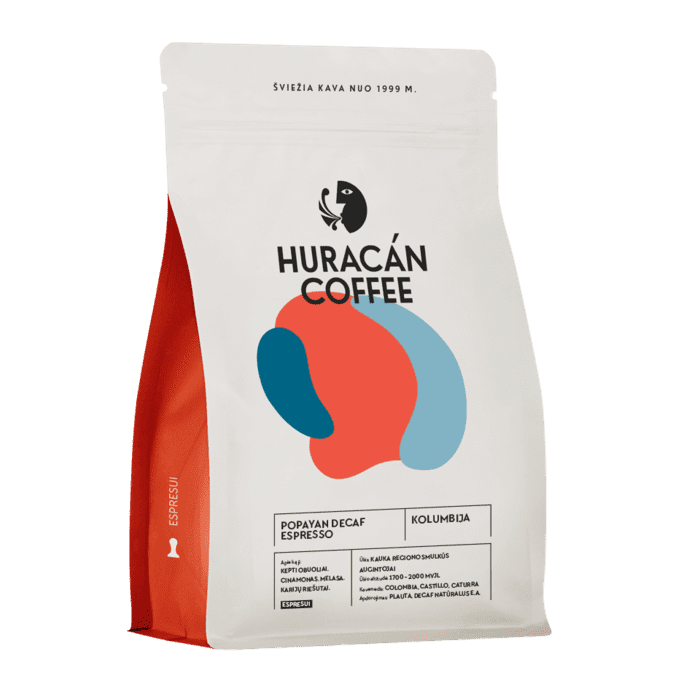
Garden berries. Cherries. Dark chocolate.
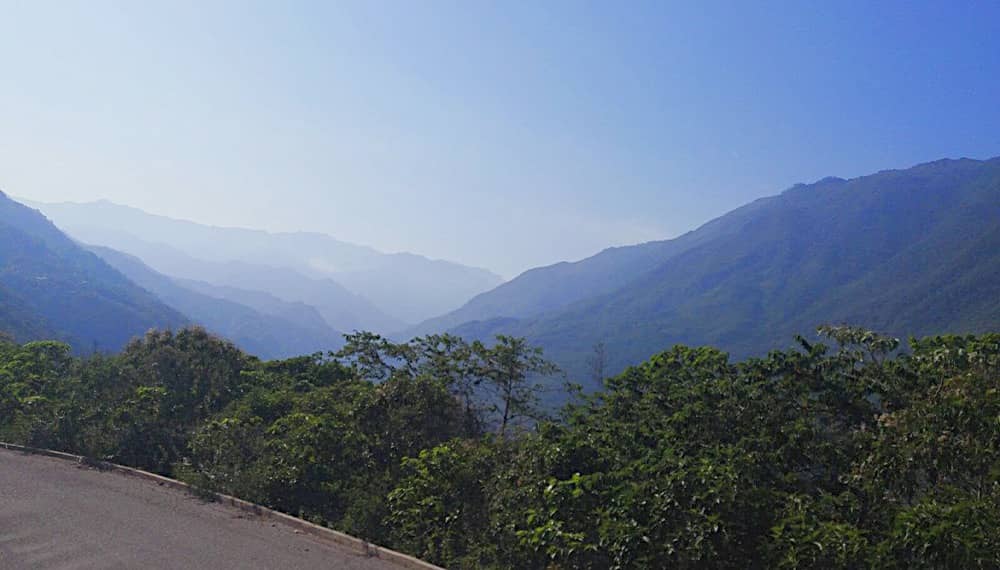
Southwestern Colombia, Cauca region, Meseta de Popayán. The area is rich in small coffee farms. Our supplier works with 65 small-scale growers from this region. Striking, rugged landscapes; cool and rainy climate; high altitude and volcanic soil. Numerous Indigenous communities and ancient archaeological sites—this is the environment in which the coffee is grown. Two harvests per year. A balanced, deep, floral and caramel-like coffee character.
E.A. (Ethyl Alcohol), also known as a natural decaffeination method. The process begins with the fermentation of fruit molasses to obtain ethanol. The ethanol is then combined with acetic acid to create ethyl acetate. It may sound unusual, but this is a completely natural compound, found in fruits, grains, and sugarcane. The green coffee beans are then steamed, soaked and allowed to swell, after which they are washed with ethyl acetate, dissolving and removing the caffeine. Finally, the beans are thoroughly rinsed with water and steam, then dried back to their original moisture level.

Why us?
Coffee comes to us directly from the place of growth.
We travel to her, taste and buy directly from the farmers. That's how we know we're bringing home coffee and not a cat in a bag. And that the money goes to the coffee farmers, not the sellers.