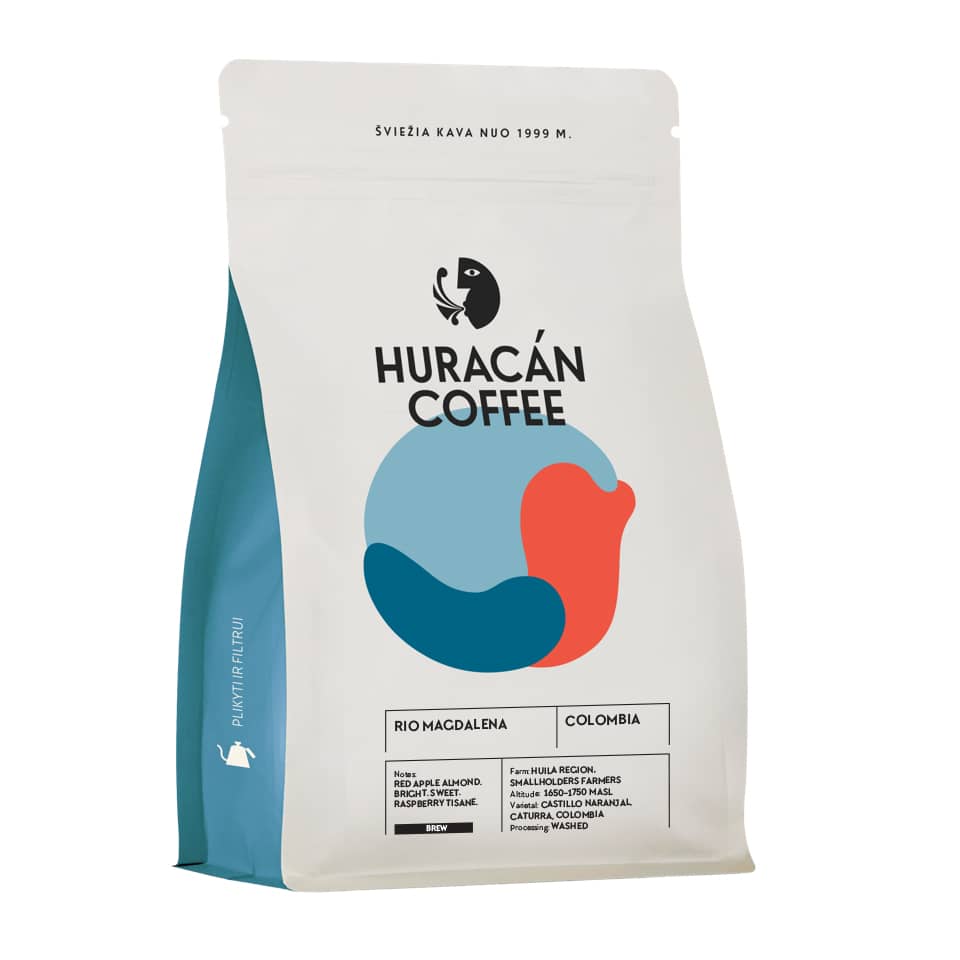


RIO MAGDALENA
Brew coffee
Red apple. Almond. Bright. Sweet. Raspberry tisane.
In 2013, the Huila coffee region was granted Denomination of Origin status — the same designation held by products like Champagne or Roquefort cheese. This recognition protects coffees whose character is closely tied to a specific place and its natural conditions.
The designation defines Huila coffees as smooth and well-structured, with bright yet balanced acidity, a medium body, and sweet fruit-forward and caramel-like notes. Compared to other Colombian regions, Huila Arabica is particularly known for its abundant and complex fruity acidity.
Huila is bordered by the Central and Eastern ranges of the Andes, with much of the region stretching along the Magdalena River valley. This geography creates a wide range of microclimates. Across coffee farms, temperatures typically range between 17 and 23 °C. Most farms are located in mountainous areas, where volcanic soils rich in nitrogen provide an excellent foundation for coffee cultivation.
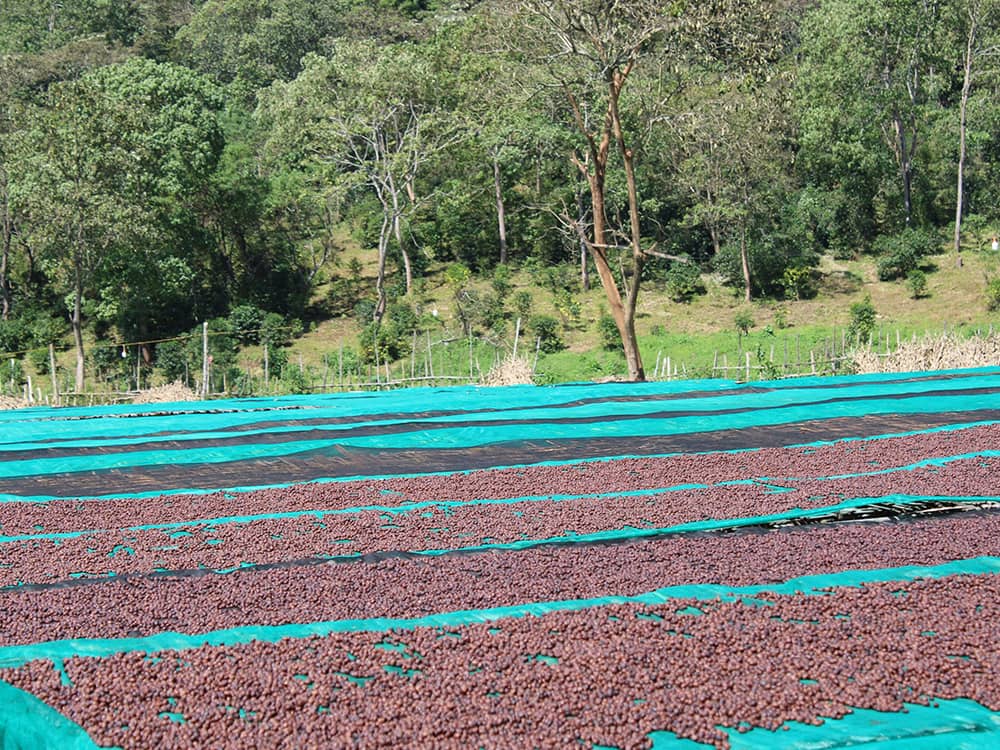
Coffee production in Huila is dominated by smallholder farmers. Farms are generally small, and many operate their own processing facilities. Under these conditions, the focus is placed firmly on quality rather than volume. Thanks to its strong reputation and its layered, fruity, and aromatic cup profile, Huila is often cited as one of Colombia’s most respected and sought-after regions among roasters and coffee professionals.
America
1650 – 1750 masl
Washed
Caturra, Colombia, Castillo Naranjar
Colombia
Huila smallholders farmers

Why us?
We keep rediscovering the best coffee
Coffee is like wine - different from year to year. Its quality is as constant as the air. The temperature changes, the humidity changes, and so does the coffee. That's why every year we search anew where the coffee was the best.