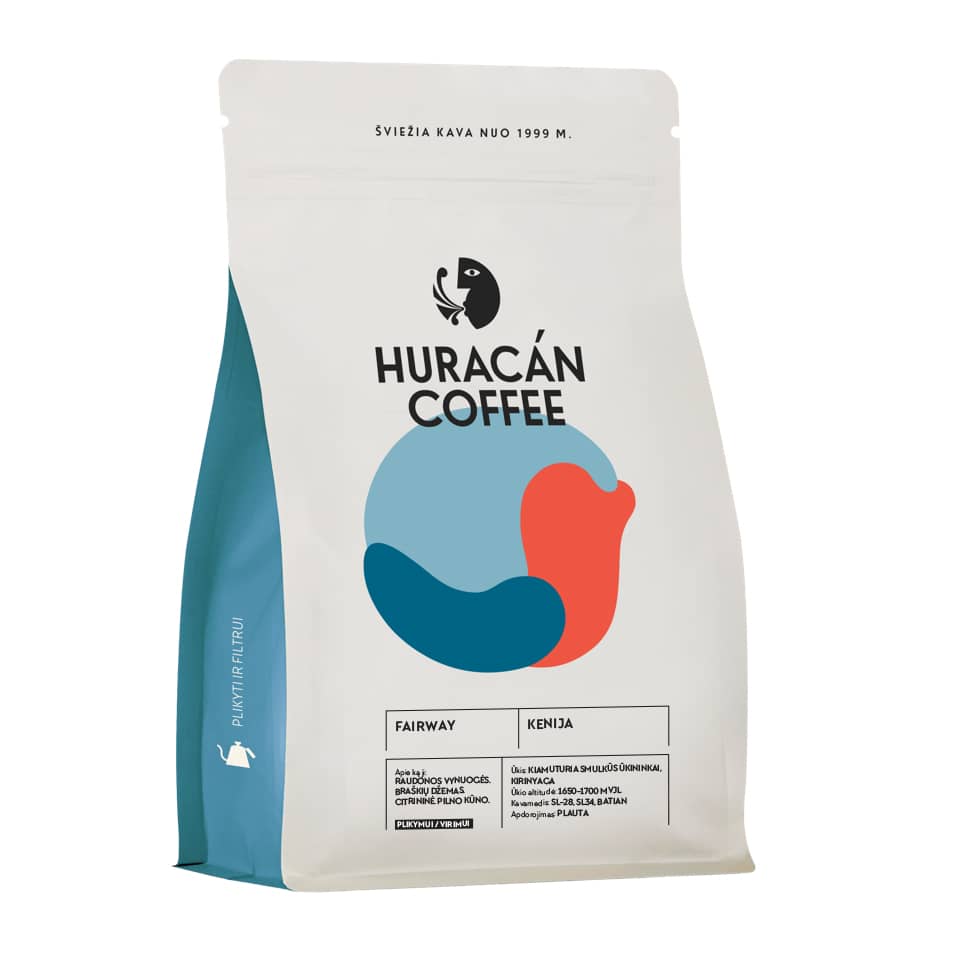


FAIRWAY
Brew coffee
Red grapes. Citrus. Strawberry jam. Full-bodied.
In the late 19th century, Bourbon coffee seeds arrived on the Kenyan coast, brought from Bourbon Island (today’s La Réunion) by French missionaries. Near Mombasa, in the Taita Taveta region, the first coffee mission took shape. From there, seeds slowly moved inland, passed between early Kenyan farmers, laying the foundations of what would become Kenya’s coffee identity.
Kenyan specialty coffee is often recognized for its juicy, syrup-like blackcurrant notes and a bright, lively acidity that feels both clear and precise. When the cup is right, it feels settled. Nothing forced. Nothing overstated.
In particular, AA and AB grade coffees from Kenya are known for their structure and layered acidity. This character comes from a rare combination of conditions: Kenya lies on the equator, coffee grows across a wide range of elevations, volcanic soils are naturally rich, and classic Arabica varieties such as SL28 and SL34 are still widely cultivated.
Agronomists often point to the mineral composition of the soils around Mount Kenya, where naturally occurring phosphoric acid contributes to the clarity and freshness found in the cup.
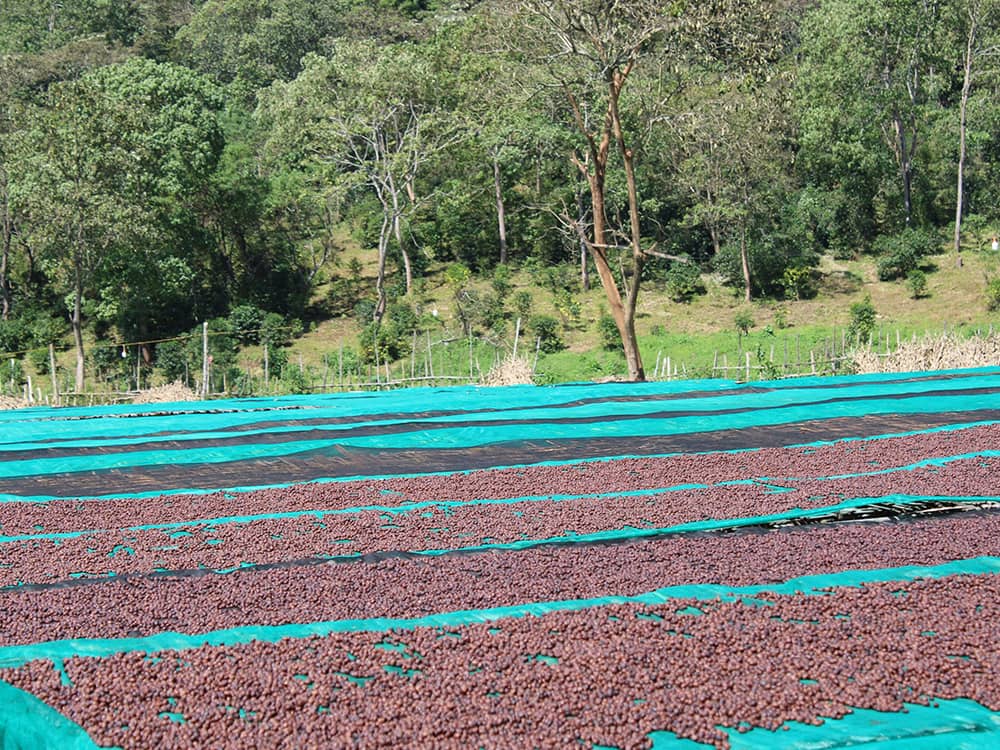
Kiamutuira Washing Station, established in 1996, is part of the Mutira Cooperative, active since 1951. Around 600 smallholder farmers deliver cherries from small plots—typically about 0.1 hectares—planted with SL28, SL34, and Batian, grown under macadamia shade.
Africa
1650 – 1700 mvjl
Washed
Batian, SL-28, SL-34
Kenya
Kiamutuira smallholders farmers, Kirinyaga

Why us?
We keep rediscovering the best coffee
Coffee is like wine - different from year to year. Its quality is as constant as the air. The temperature changes, the humidity changes, and so does the coffee. That's why every year we search anew where the coffee was the best.